



Guided vs. Unguided Meditation: Which Fits Your Attention Style?
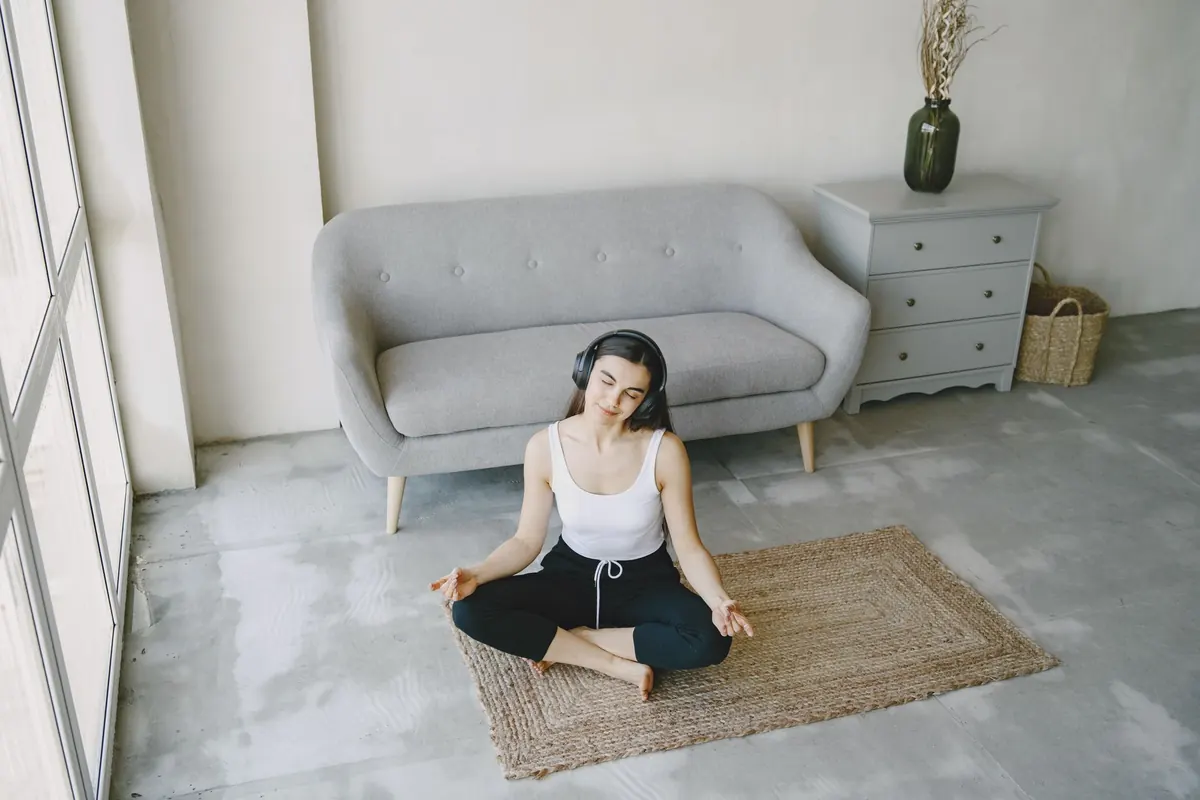
Put two people on the same cushion for ten minutes and they may be doing entirely different practices. One follows a voice through a body scan. The other sits in silence with a timer and a simple instruction to notice the breath. Neither is more authentic. The format changes what your attention has to do, and that is where the guided-versus-unguided question becomes useful.
What Guided Meditation Asks of You
A guided session gives your attention a rail to hold. You might hear prompts to soften the jaw, count five breaths, notice the weight of your feet, or label a thought as “planning” and return to the room. The voice sets the pace, chooses the anchor, and decides when to shift from breath to body to sound.
That structure is a real benefit when your mind is busy or your energy is low. If you have ever sat down intending to meditate and spent the first five minutes deciding whether to focus on your nose, your belly, or the radiator, you know how much mental admin a silent session can carry. Guided practice removes many small decisions. It also helps when you are tired, anxious, or new to meditation and want someone to keep the rhythm steady.
The trade-off is dependence on the guide’s style. A voice that feels warm to one person may feel slow, theatrical, or distracting to another. A good guide leaves room between instructions; a poor one fills every pause. If you find yourself waiting for the next prompt rather than noticing your own experience, the guide has become the practice instead of the support.
What Unguided Meditation Asks of You
Unguided meditation hands the controls back to you. You choose one anchor—breath, sound, sensation in the hands—and decide how long to sit. A timer marks the end. There is no voice to rescue you from a thought loop, no prompt to tell you what comes next. That can feel spacious or unnerving, depending on the day.
This format builds agency. You learn what your attention actually does when nobody is narrating: where it drifts, how quickly it returns, which stories it prefers. Over time, that self-knowledge carries into ordinary life. You notice tension in a meeting and remember to feel your feet. You catch a spiral before it gathers speed. Silent practice also suits people who dislike being spoken to while resting, who practice in shared spaces, or who want a short session without finding the right audio.
The challenge is uncertainty. Without a guide, small questions grow: Am I doing this right? Should I open my eyes? Is boredom a sign I should stop? Unguided does not mean unsupported. A written instruction, a familiar timer, or a short sequence learned from a teacher can provide enough shape without filling the silence.
Side by Side: What Changes When the Voice Stops
- Entry cost: Guided practice is easier to begin because someone else sets the route. Unguided practice asks you to choose an anchor, duration, and posture before you sit.
- Mental load: Guided sessions reduce in-the-moment decisions. Silent sessions ask you to notice drift and return without external cues.
- Recovery from distraction: A guide can bring you back with a prompt. In silence, you practice recognizing the drift yourself, which is slower but more portable.
- Flexibility: Unguided practice fits odd gaps—three minutes before a call, five minutes on a train—without headphones or a screen.
- Insight: Silence can reveal your habitual patterns more clearly. Guidance can offer new angles you would not choose on your own.
- Best use: Guided sessions suit learning, low energy, bedtime, and stressful seasons. Unguided sessions suit routine-building, autonomy, and ordinary-day carryover.
The useful question is not which format is superior. It is which one gives your attention the right amount of scaffolding for the season you are in.
Find Your Attention Style
Attention style is not a fixed identity, but most people notice a lean. Ask yourself a few plain questions. When a voice begins, do you feel relief or restriction? When you drift, do you prefer a gentle prompt or your own recognition of the drift? Does choosing an anchor feel creative or exhausting? Do you need quiet to settle, or does total quiet make every small sound louder?
You may lean guided if…
You are new to meditation, you practice after a long day, or decision fatigue follows you into the room. Guided sessions can also help when you want to learn a specific sequence—a body scan, a breathing practice, a loving-kindness reflection—without memorizing it first.
You may lean unguided if…
You already know a simple anchor, you dislike headphones, or you want practice that travels well. Silent sessions suit people who feel over-directed in daily life and want one place where nobody is giving instructions. They also suit short, frequent sessions: two minutes of silence after lunch can be more sustainable than waiting for a twenty-minute audio.
How to Switch Without Losing Momentum
Switch formats the way you would adjust a recipe, not the way you would abandon a meal. Change one variable at a time.
- Shrink the dose. If you usually do twenty minutes guided, try five minutes unguided. A short silent sit you actually complete teaches more than a long one you dread.
- Keep the same anchor and posture. If your guided practice focuses on the breath, keep the breath. Sit in the same chair. Let familiarity carry you.
- Write a three-line script. “Sit upright. Feel the breath at the nostrils. If I drift, return once.” Read it, set a timer, and put the script away.
- Use an exit plan. If restlessness becomes distress, open your eyes and stop. Returning to guided practice is not failure. If meditation reliably brings up intense fear, dissociation, or difficult memories, stop and speak with a qualified mental health professional.
- Alternate rather than convert. Try guided on Monday and Wednesday, silent on Tuesday and Thursday. The contrast shows you what each format does for your attention.
Common Traps and Simple Adjustments
Treating silence as a test. Silence is a format, not a grade. If it makes you tense, shorten it or use a single written prompt.
Half-listening to a guide. Guided practice can become background audio. Sit upright, choose one instruction, and follow that one closely. Let the rest pass.
Chasing the perfect voice. If no guide feels right, use audio only for the first two minutes, then sit in silence. You get structure without a full narration.
Overcomplicating unguided practice. One anchor, one timer, one return. That is enough. You do not need a new technique every week.
A Practical Closing: Your Next Seven Days
For the next week, run a small experiment. On day one, do five minutes guided and note one word for how you felt before and after. On day two, do three minutes unguided with the same anchor. On day four, repeat whichever format felt more sustainable. On day seven, decide what next week needs: more guidance, more silence, or a mix.
Keep a short log: format, length, and what your attention did. You are not looking for perfect sessions. You are looking for the amount of support that helps you sit down again tomorrow.
Photo: Gustavo Fring / Pexels